
Most people who have frozen shoulder spend weeks thinking it is something else. A pulled muscle, bad posture, or the result of sleeping wrong. Frozen shoulder is a painful condition that develops gradually and makes movement increasingly difficult over time. And by the time most people figure out what is actually going on, the condition has already progressed further than it needed to.
The fortunate thing is that this condition is very treatable, especially if you know when you should see a physical therapist for treatment.
What Is Frozen Shoulder?
Frozen shoulder, also called adhesive capsulitis, is a condition where the connective tissue surrounding the shoulder joint slowly thickens and tightens. As that happens, the space inside the joint gets smaller. It then causes movement to become painful and eventually makes the shoulder feel like it is stuck. It builds up over time, which is a part of why so many people miss it early on.
It goes through three stages:
- Freezing – this is when the pain starts, and the shoulder begins losing range of motion. A lot of people think it’s just a regular strain at this point. This stage can last anywhere from 6 weeks to 9 months.
- Frozen – the pain now sometimes eases a little at this stage, but the stiffness gets much worse. The shoulder feels genuinely locked, and everyday tasks become a real challenge. This stage typically lasts 4-12 months.
- Thawing – the movement slowly starts to come back. With proper treatment, this stage goes faster. Without it, full recovery can take up to two years or longer.
People who develop frozen shoulder on one side have a 15% chance of developing it on the other side within five years. That’s why it’s important to address it as soon as possible.
What Causes Frozen Shoulder?
There’s no single definitive cause. Researchers are still working to fully understand it, but what’s clear is that certain conditions and situations make a person significantly more likely to develop it. This condition often develops in people who have not moved their shoulder much after an injury, such as a shoulder fracture, rotator cuff injury, or tendinitis, as well as surgery, though it can also appear with no prior injury at all.
Known risk factors:
- Diabetes (high blood sugar levels affect the collagen in the shoulder capsule)
- Age (most cases happen between 40 and 60 years old)
- Sex (women are more likely to develop it than men)
- Untreated shoulder injuries
- Thyroid disorders (overactive and underactive thyroid)
- Prolonged immobility (after a fracture, stroke, injury, etc.)
Symptoms of Frozen Shoulder
The symptoms of frozen shoulder do not show up all at once. That’s why a lot of people do not take it seriously until the shoulder is already significantly restricted. Here is what to watch out for:
- Stiffness that builds over weeks with no clear cause
- Deep, achy pain covering the whole shoulder (not in one spot only)
- Everyday tasks like getting dressed or reaching behind the back become harder
- The shoulder feels stuck or blocked
- Movement is getting limited in every direction
- Pain that gets worse at night and disrupts sleep
How Is Frozen Shoulder Treated?
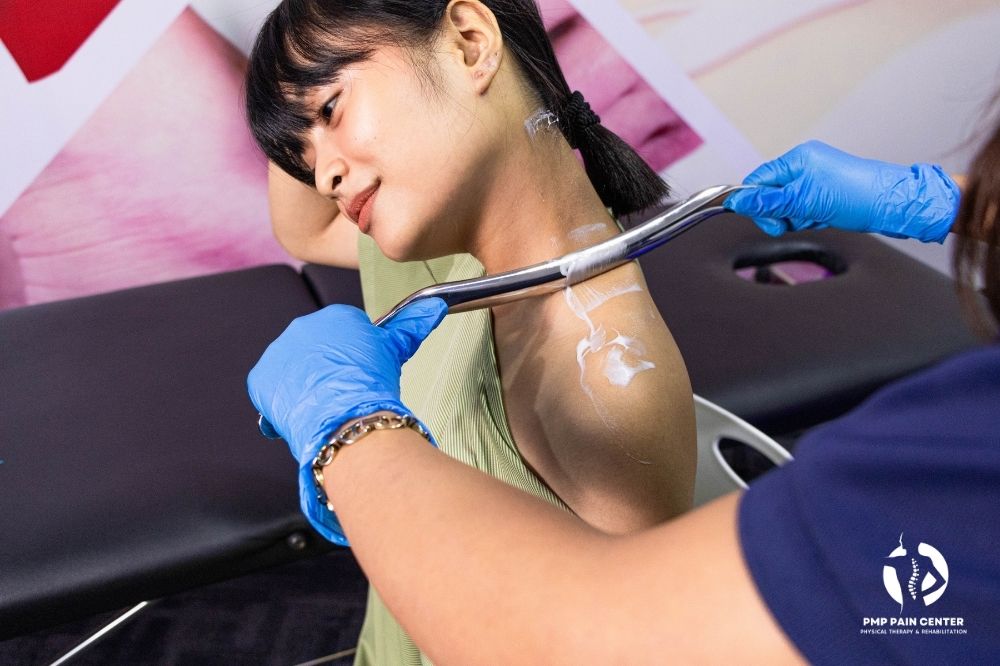
Frozen shoulder treatment depends on which stage the condition is in when you start. What works during the freezing stage is different from what the shoulder needs during the thawing stage, so getting a proper assessment is the whole foundation of recovering properly.
1. Physical Therapy – Physical therapy performed by licensed physical therapists is the most important part of recovery for most patients. The recommended treatment programs are specific to the stage of the condition. Depending on where the shoulder is in its progression, treatment may include:
- Joint Mobilization
- Dry Needling
- Manual Therapy
- Shockwave Therapy
- Tecar Therapy
- Therapeutic Exercises
2. Corticosteroid Injections – Corticosteroid injections can reduce inflammation enough to make physical therapy more manageable for patients dealing with significant pain during the freezing stage. Research has shown that injections combined with supervised physiotherapy lead to more rapid improvement in range of motion compared to either approach used alone.
3. Heat Therapy – Applying heat before stretching or exercise sessions helps the joint capsule loosen up enough to allow better movement. It is a small step that makes a noticeable difference in how productive each session ends up being.
3. Surgery – This is considered only when conservative treatment has not produced enough improvement after an extended period. The two most common procedures are manipulation under anesthesia and arthroscopic capsular release. Most patients do not reach this point if treatment starts early enough.
How to Prevent Frozen Shoulder
Frozen shoulder is not always preventable, especially for people already managing diabetes or thyroid conditions. But the risk can be reduced with the right habits. Here’s what you can do:
- Keep the shoulder moving after any injury or surgery. Gentle guided movement as early as safely possible is much better than complete rest.
- Do not ignore shoulder pain that stays for more than 2-3 weeks. Have it checked by a physical therapist or a medical doctor as soon as you can.
- If you have diabetes, manage your blood sugar level to lower the risk of frozen shoulder.
- Build a habit of regular shoulder stretching, especially if you spend long hours at a desk or in positions that limit shoulder movement.
- Always ask about rehabilitation after any shoulder-related injury or procedure immediately.
Frequently Asked Questions
Can frozen shoulder fully resolve, or will there always be some stiffness left?
In most cases, frozen shoulder can fully resolve with proper treatment and rehabilitation. Some stiffness may remain if the condition is left untreated for a long time, which is why early physical therapy is important.
Does frozen shoulder always need surgery?
No. Most people recover without surgery. Physical therapy and other non-surgical treatments are often enough to improve movement and reduce pain. Surgery is usually only considered when conservative treatments have not provided enough improvement.
How long does physical therapy for frozen shoulder usually take?
Recovery time varies from person to person. Some people notice progress within a few weeks, while others may need several months of therapy. In general, starting treatment earlier can help speed up recovery.
Is there a difference between dry needling and acupuncture?
Yes, they are both different procedures that are based on different principles. Dry needling is rooted in Western medicine and targets specific trigger points to relieve tension and improve function. Acupuncture comes from traditional Chinese medicine and focuses on restoring energy flow throughout the body.
Read here: Dry Needling vs. Acupuncture: Difference, Benefits, and Risks
Don’t Wait for Your Shoulder to Freeze Completely
Frozen shoulder rarely gets better overnight, and one of the biggest mistakes people make with frozen shoulder is waiting too long to seek help. If your shoulder has been getting stiffer, more painful, or harder to move, PMP Pain Center is here to help. We have a team of licensed physical therapists and medical doctors who can assess your condition and create a personalized treatment plan for you. Contact us to schedule a consultation.