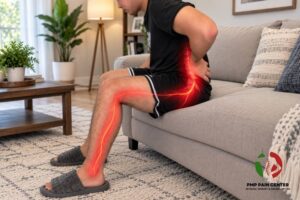
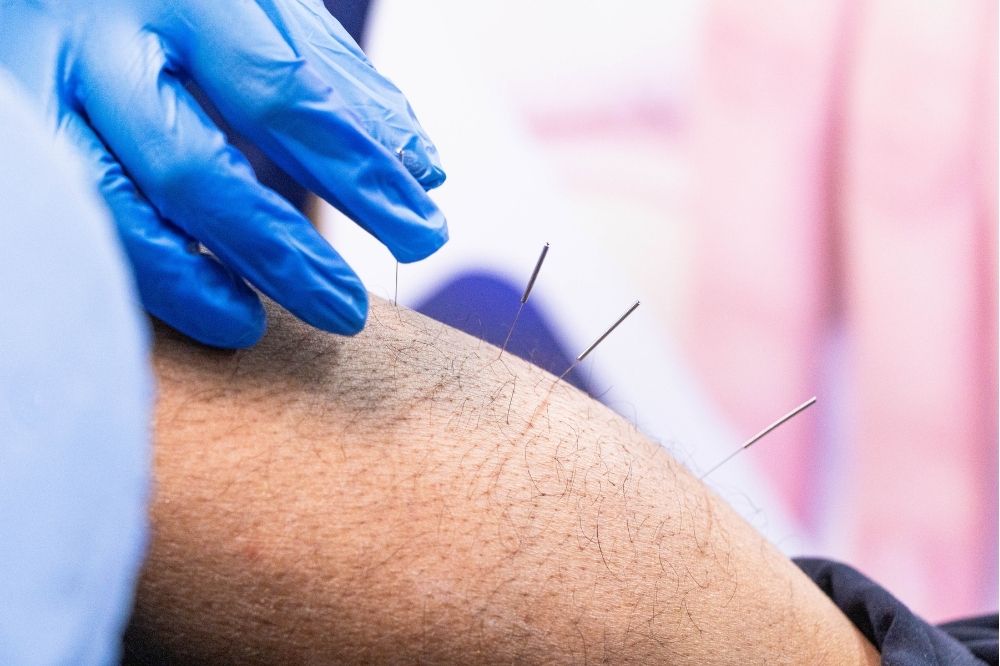
Dry needling and acupuncture seem almost identical because they both use very thin needles and they are commonly used to help with pain. But despite the similarities, they’re actually very different treatments that come from different backgrounds. Dry needling is based on modern anatomy and physical therapy principles, while acupuncture has roots in traditional Chinese medicine that go back thousands of years.
Understanding the difference between dry needling vs. acupuncture makes it much easier for you to decide which treatment may be better for your condition.
What Is Dry Needling?
Dry needling is a treatment that comes from modern Western medicine. What it does is insert thin needles into trigger points, which are basically the tight, painful knots you feel in your muscles when you press on them.
The term “dry” simply means that no medication or injection is involved. The needle itself is the treatment. The muscle responds with a quick, involuntary twitch when the needle hits the right trigger point. That twitch is actually what you want. It means the knot is releasing and the area is starting to heal.
Because it focuses on muscles and soft tissues, dry needling is commonly used for conditions such as:
- Neck pain
- Back pain
- Shoulder pain
- Sports injuries
- Muscle tightness and trigger points
- Movement restrictions
Dry needling is performed by licensed physical therapists and qualified healthcare professionals who have received specialized training in this technique.
What Is Acupuncture?
Acupuncture is much older (over 2,000 to 3,000 years old) and it comes from traditional Chinese medicine. The philosophy behind it is that the body has energy, called Qi, that flows through specific pathways called meridians. When that flow gets blocked or disrupted, that is when pain and illness happen. Acupuncture needles are placed at specific points along those pathways to restore the balance.
This concept is actually not that strange for us Filipinos. We already have our own version of understanding body imbalance, like binat, or the idea that the body gets disrupted after physical stress or exposure. Acupuncture works from that same logic, just with a more structured system behind it.
Because of its broader approach, acupuncture is often used for:
- Chronic pain conditions
- Headaches and migraines
- Stress and anxiety
- Sleep difficulties
- Digestive concerns
- General wellness support
Dry Needling vs. Acupuncture: What’s the Difference?
While both treatments involve the use of thin needles, they are based on very different principles and are often used for different purposes.
| Dry Needling | Acupuncture |
| Developed from modern Western medicine (1970s) and physical therapy practices | Rooted in traditional Chinese medicine with thousands of years of history |
| Best for muscle pain, tightness, and movement dysfunction | Mostly used for chronic pain, stress, and holistic conditions |
| Targets tight muscles and trigger points based on anatomy and biomechanics | Uses specific acupuncture points along meridian pathways |
| Performed by licensed physical therapists and sports medicine doctors | Practiced by licensed acupuncturists (certified in the Philippines, as it is not licensed through the PRC) |
| Releases trigger points and restores muscle function | Restores energy balance and reduces pain broadly |
Benefits of Dry Needling
If you have a muscle knot that has been there for weeks or even months, or pain that does not seem to respond to massage or rest, dry needling tends to work faster and more directly than most other approaches.
- Directly releases tight muscle knots at the source
- Research shows dry needling may significantly reduce pain and improve pressure pain threshold within the first 12 weeks following treatment
- Improves range of motion by addressing muscle tension around restricted joints
- Works really well when combined with other physical therapy programs
- Effective for neck pain, back pain, shoulder pain, and sports-related injuries
- The twitch response during the session resets the muscle and improves recovery
Benefits of Acupuncture
Acupuncture does more than target one muscle or one area. Its philosophy looks at the body as a whole, which makes it useful for conditions that are harder to pin down to one specific spot.
- Helps with relaxation, digestion problems, and anxiety (not limited to physical pain)
- Research suggests regular sessions may help people with a history of migraines or those who experience them frequently
- Good option when pain is connected to stress or when the body just feels generally off
- Results for chronic pain can last six to twelve months after a full treatment course
- Used for conditions like arthritis, anxiety, digestive issues, and difficulty sleeping
- Offers longer-lasting effects and lower medication use compared to some conventional treatments
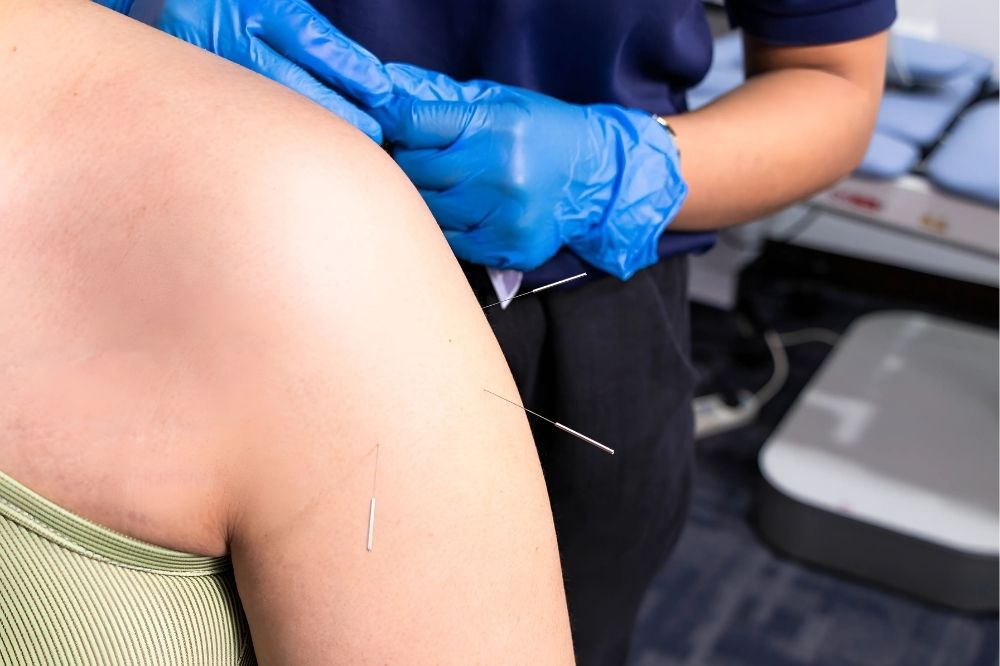
Risks and Side Effects of Dry Needling and Acupuncture
Both treatments are safe when done by someone who knows what they are doing. The risks that people worry about are mostly linked to practitioners who are not properly trained. The most common side effects of both are soreness around the needle area, some light bleeding at the insertion point, and mild bruising.
These side effects are usually very minor and go away quickly. Most people say it feels similar to the soreness you get after a deep tissue massage. The more serious risks are rare but still worth knowing:
- Infection can happen if non–sterile needles are used. Always make sure your practitioner is using single-use disposable needles.
- People on blood thinners, those with active infections at the treatment site, and patients with lymphedema should avoid both
- Pregnant women should stay away from specific acupuncture points that are known to trigger contractions
- Injury to nerves or internal organs is possible if the needles are placed incorrectly
Frequently Asked Questions
Does dry needling hurt more than acupuncture?
It depends on the person. Dry needling tends to feel more intense at the moment of insertion because it is targeting an active trigger point, and the twitch response can feel like a quick cramp or deep pressure. Acupuncture is usually described as a duller, more spread-out sensation. Neither one should be outright painful when done by someone who knows what they are doing.
Can dry needling and acupuncture be done on the same day as other physical therapy treatments?
Yes, in most cases, and combining them with other treatments usually produces better outcomes than using either alone. We actually recommend combining dry needling with manual therapy, therapeutic exercises, and other physical therapy treatments.
Does dry needling go deeper than acupuncture?
Not necessarily. Depth depends on the target area and the patient, not the technique itself. Dry needling goes as deep as needed to reach the trigger point, while acupuncture depth varies based on the point being targeted.
How long do dry needling results last?
For a resolved trigger point, results can last anywhere from a few weeks to several months. That window gets longer when dry needling is paired with corrective exercises and proper rehabilitation. Trigger points tend to come back if the underlying cause is not addressed.
Find Out Which Treatment Is Right for You at PMP Pain Center
Acupuncture has its place, but for the kind of pain most people come in with, which is muscle tightness, trigger points, and movement problems that keep coming back, dry needling is what actually gets to the root of it. At PMP Pain Center, it’s offered as part of a full rehabilitation program so the results stick rather than just providing temporary relief. If the pain has been around long enough, it’s worth getting a proper look at it sooner rather than later. Contact us to schedule an appointment.