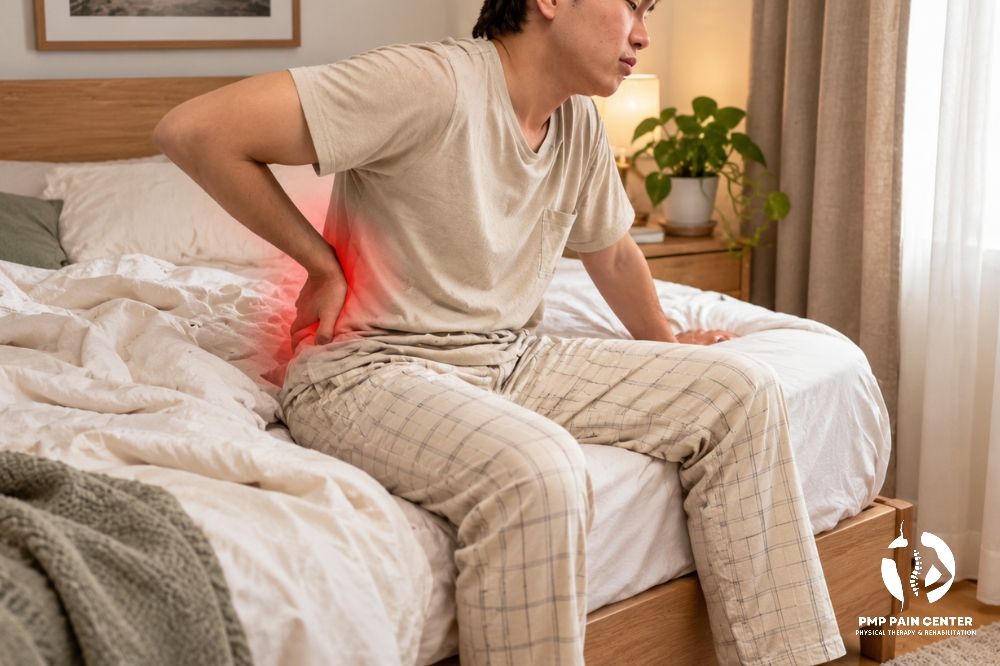
Back pain is one of the most common health complaints in the world but a lot of people are not entirely sure what’s causing theirs. If you look it up on Google, you’ll see a lot of conditions that seem similar to what you’re currently experiencing. It would point you to muscle strain, sciatica, scoliosis, herniated discs, and many more. However, two of the most commonly confused ones are muscle strain and herniated discs.
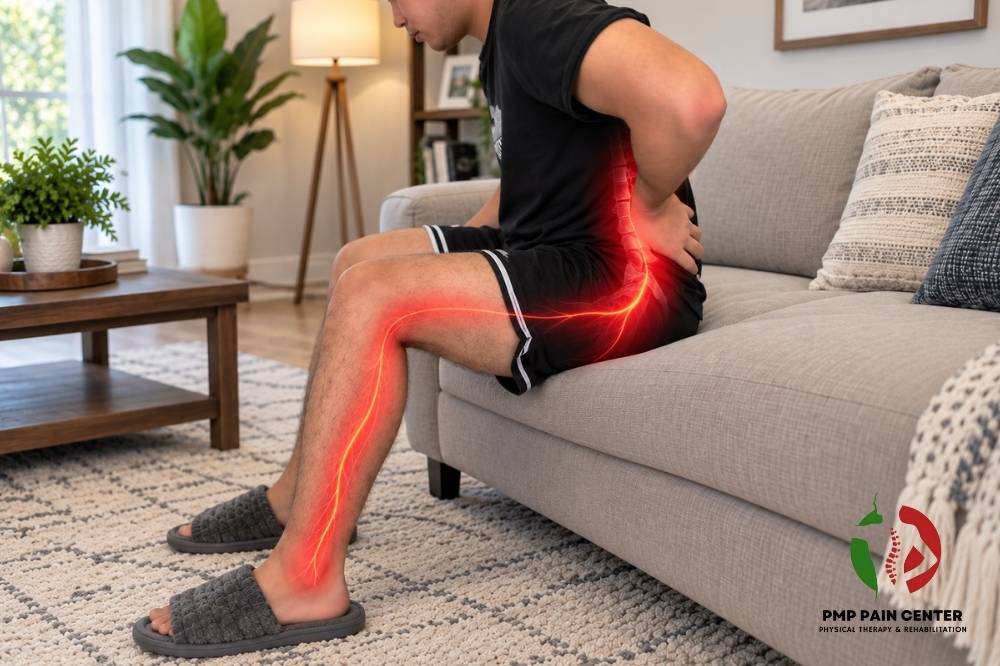
The difference between a herniated disc and a muscle strain is how the pain feels and where it travels. Muscle strain stays in one place. A herniated disc sends pain, tingling, or numbness into the arms or legs because of nerve compression. Knowing the difference between the two is extremely important when it comes to your neck or back pain treatment.
What Is a Herniated Disc?
The spine is made of vertebrae stacked on top of each other. Between each one sits a disc that acts as a cushion, and each disc has a tougher outer layer and a soft, gel-like center. A herniated disc happens when that soft inner material pushes through a tear in the outer layer and presses against the nearby nerves. It’s also sometimes called a slipped disc or a ruptured disc, and it can happen anywhere along the spine. The lower back and the neck are the most common locations.
What Is a Muscle Strain?
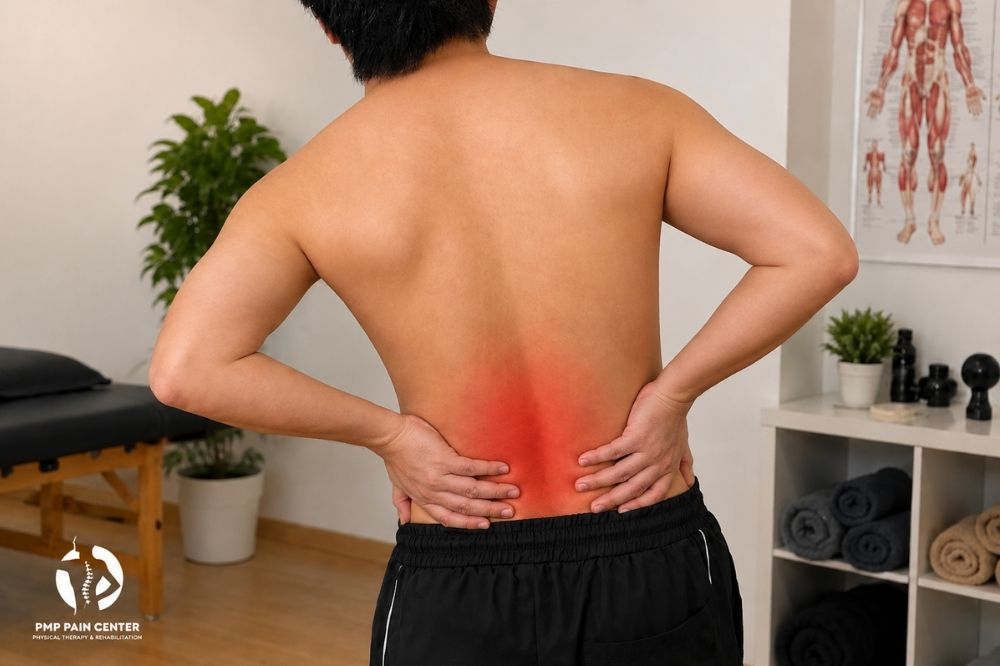
A muscle strain happens when a muscle or its surrounding tendons get overstretched or torn. It’s one of the most common causes of back pain and usually has a clear starting point such as lifting something too heavy, overworking a muscle that wasn’t warmed up properly, or a sudden awkward movement. It also ranges from mild to severe depending on how much tissue was damaged.
Herniated Disc vs. Muscle Strain: What’s the Difference?
In 2020, back pain affected an estimated 619 million people worldwide, according to the World Health Organization. And in the Philippines, it has held the top spot as the most common occupational disease since 2011. Most people who feel it usually assume it’s muscular. Sometimes, that’s correct, but a herniated disc can feel deceptively similar to a pulled muscle, at least in the early stages of the condition.
These two conditions can feel similar at first, but the differences become clearer the more you pay attention to how the pain behaves. Here’s a side-by-side breakdown:
| Herniated Disc | Muscle Strain | |
| Type of pain | Shooting pain or sharp, burning, or electric shock-like | Deep ache, soreness, or throbbing |
| Pain location | Can radiate into the arms, legs, or buttocks | Stays in the injured area |
| Nerve symptom | Numbness, tingling, or weakness in the limbs | None |
| Onset | Gradual or after a specific incident | Usually tied to a specific movement |
| Muscle spasms | May be present | Very common |
| Pain with movement | Worsens with certain positions like sitting or bending forward | Worsens with movement and usually eases with rest |
| Duration | Can persist for weeks to months without treatment | Often improves after a couple of days to a few weeks |
| What’s affected | Spinal disc pressing on a nerve | Muscle or tendon tissue only |
A good sign to keep in mind is whether the pain travels. If it stays in one spot, muscle strain is more likely. If it shoots down the leg or arm and comes with the symptoms mentioned above, a herniated disc is more likely. It’s also the kind of radiating pain that people often describe when they say they think they have sciatica. Either way, it needs proper assessment before any treatment begins.
How Can You Tell If It’s a Herniated Disc or a Muscle Strain?
The best way to know if it’s a herniated disc or a muscle strain is to visit a licensed physical therapist for a thorough assessment. But there are patterns or signs worth paying attention to just to give you an idea of what you might be experiencing.
Herniated Disc Symptoms
Lumbar Spine (Lower Back)
• Pain in the lower back that radiates down the buttock, leg, or foot (sciatica)
• Muscle weakness in the leg or foot
• Numbness or tingling in the leg or foot
• Pain that gets worse when sitting, bending forward, or coughing
Cervical Spine (Neck)
• Pain that radiates down the arm into the hand or fingers
• Muscle weakness in the arm or hand
• Sharp or burning pain that gets worse when sneezing, coughing, and laughing
• Numbness or tingling in the shoulder, arm, or hand
• Pain that worsens with certain neck movements
Muscle Strain Symptoms
• Muscle spasms or tightness in the affected area
• Deep, aching pain that stays in one area
• Stiffness that makes it hard to move comfortably
• Usually tied to a specific activity or incident
• Swelling or fluid buildup around the injured area
• Bruising
What Causes a Herniated Disc and a Muscle Strain?
The causes are different, but they sometimes overlap. Most herniated discs develop over time rather than from one incident. It happens because, as the discs gradually lose water content and flexibility with age, even a minor movement can eventually cause the inner material to push through. Common causes include age-related disc degeneration, repetitive bending and lifting, carrying excess weight, prolonged sitting, and genetics.
Muscle strains, on the other hand, tend to have a more immediate cause. The muscle gets pushed beyond what it can handle. Common causes include lifting too heavy or with poor form, overuse without enough recovery time, weak core muscles, poor posture held for too long, or a sudden awkward movement.
How Are These Conditions Diagnosed?
These conditions are diagnosed by a thorough assessment performed by a licensed physical therapist. They will often ask when it started, what exactly you are feeling, what triggers it, and what makes it better or worse. Then, they will perform a physical examination to check your posture, range of motion, muscle strength, and more. For most muscle strain cases, this is already enough to confirm the diagnosis and begin treatment.
For a suspected herniated disc, imaging like an MRI may be recommended to confirm the location and severity of the herniation, particularly when nerve symptoms like numbness, tingling, or leg weakness are present. However, imaging is not always necessary.
What Are the Best Treatment Options?
Treatment depends entirely on which condition is present. That’s why getting the diagnosis right matters to find the best treatment options for your specific condition.
For Herniated Disc
Treatment takes longer and needs more structure for herniated discs. Physical therapy and rehabilitation are the standard first approach to reduce nerve pressure, build strength around the affected area, correct movement habits, and more. Pain medication may also be used alongside rehabilitation. Sometimes, surgery or injections are considered when conservative treatment has not produced enough improvement after several months.
For Muscle Strain
Most strains respond well to rest, ice or heat, gentle movement, and a gradual return to normal activity. Mild to moderate cases typically resolve within a few weeks. Anti-inflammatory medication may help with pain when recommended by a doctor.
For patients whose pain has been going on for months without any improvement at all, understanding how physical therapy can help chronic back pain may help you understand what long-term rehabilitation looks like.
How Can Physical Therapy Help with Muscle Strain and Herniated Disc?
Physical therapy is one of the most effective treatments for both conditions, though the approach is different depending on what is being treated. Here’s what treatment looks like for each condition:
How Physical Therapy Treats a Herniated Disc
The goal of physical therapy for a herniated disc is to reduce pressure on the compressed nerve, address the movement habits and muscle imbalances that contributed to the herniation, and restore proper spinal function. Treatment may include:
- Manual therapy
- Tecar therapy
- Dry needling
- Joint mobilization
- Therapeutic exercises
- Patient education
Spinal manipulation may also be part of the treatment program but only for mild to moderate cases and only after the patient has been properly cleared for any red flag signs and symptoms.
How Physical Therapy Treats Muscle Strain
The focus of physical therapy for muscle strain is to promote tissue healing and reduce muscle tension and spasms. It also aims to rebuild strength in the affected area to prevent the injury from happening again. Treatment may include:
- Manual therapy
- Therapeutic exercises
- Electrotherapy
- Soft tissue mobilization
- Patient education
When Should You See a Physical Therapist?
The sooner the better for both conditions, but especially for a herniated disc where nerve compression left unaddressed can lead to more significant damage over time. See a physical therapist as soon as possible if you’re experiencing any of the following:
- The pain is radiating into the arms or legs
- The pain has not improved after two weeks of basic home care
- There’s weakness, numbness, or tingling in the limbs
- Day-to-day activities are becoming harder to manage
- The pain keeps coming back even after it settles
- The pain feels like it’s getting worse over time
Frequently Asked Questions About Herniated Discs and Muscle Strains
How do I know if my back pain is muscular or spinal?
Muscular pain stays in one spot and is usually tied to a specific activity. Spinal pain, like a herniated disc, radiates into the arms or legs and comes with tingling, numbness, or weakness. If the pain travels beyond the back, something beyond the muscle is likely involved.
What’s the best sleeping position for a herniated disc?
The best sleeping positions for back pain depend on your specific condition, but lying on your back with a small pillow under your knees is the safest choice. It keeps the spine in a neutral position and takes pressure off the disc. On your back with a pillow under your knees also works. Stomach sleeping is what you need to avoid since it adds strain to the lower back.
How do I know if it is nerve pain or muscle pain?
Nerve pain travels. It burns or feels like an electric shock running down the arm or leg. Muscle pain just sits there where the injury happened. If pressing on the area is tender but the pain stays there, it’s most likely muscular. If it shoots somewhere else or comes with tingling, it may be a nerve pain issue.
What’s worse, muscle pain or nerve pain?
Nerve pain is harder to live with. It’s sharper, more persistent, and does not respond to rest the way muscle pain does. Muscle strains heal, but untreated nerve compression does not always heal.
How long will it take for a strained back muscle to heal?
A mild strain can clear up in a week or two with rest and gentle movement. A more significant one can take four to six weeks. If it keeps coming back or is taking longer than expected, it’s best to schedule an appointment with a licensed physical therapist.
Back Pain That Makes Sense Is Pain You Can Address Properly
Most people who have been living with back pain for weeks have already tried something at home. Rest, heat, pain medication, stretches from YouTube videos, and many more. Sometimes it works. But sometimes, it does not. Once you know which one you are dealing with, treatment and recovery become a lot easier and smoother, especially with the help of licensed physical therapists.