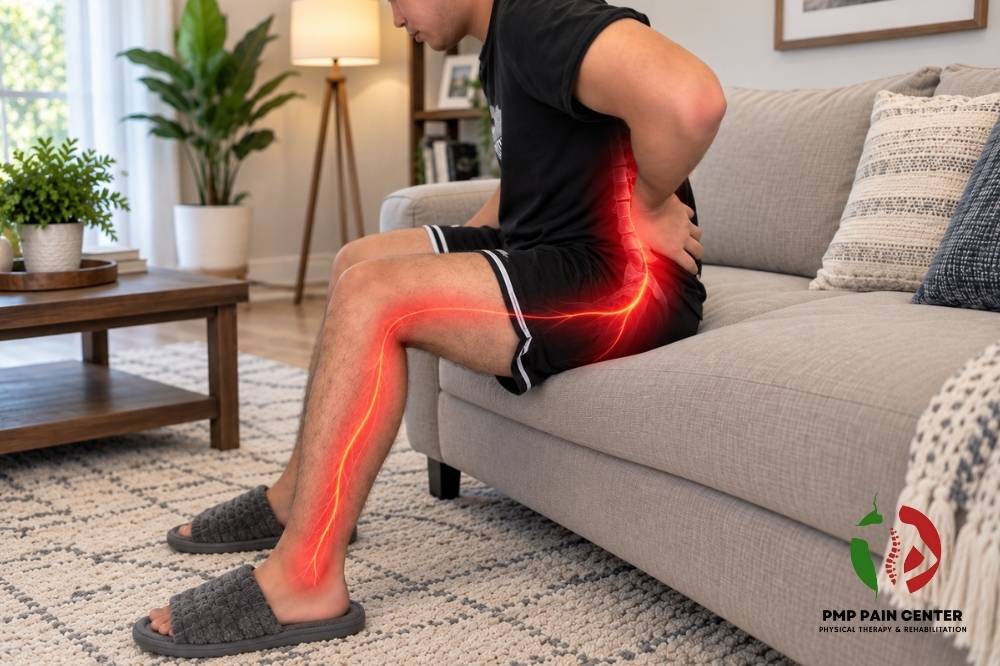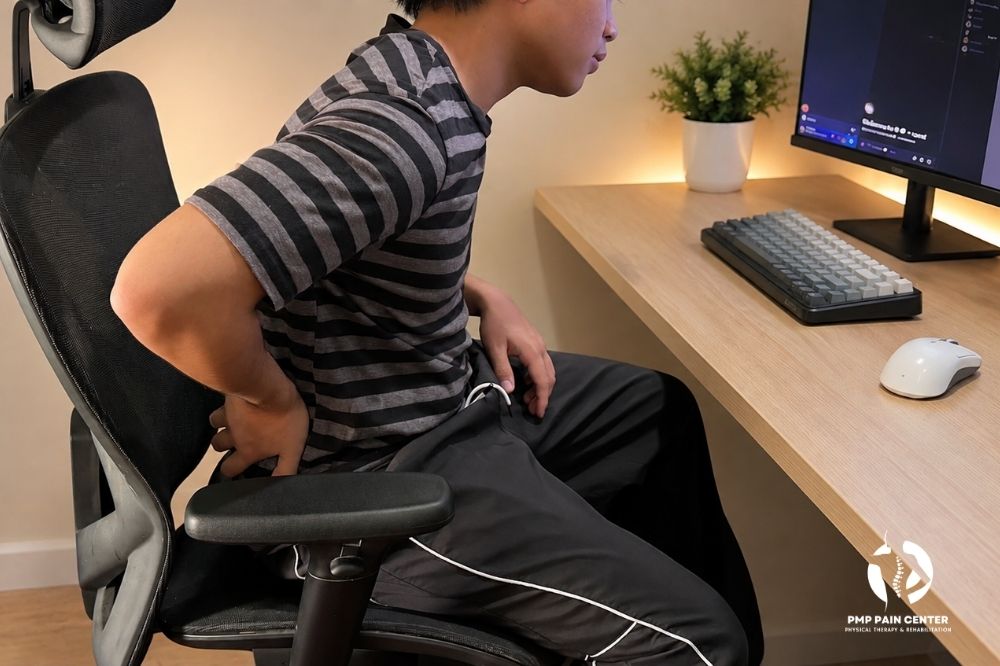

Upper back pain is less talked about than lower back pain but it’s far from uncommon, especially here in the Philippines. A local study on the prevalence of neck and upper back pain among constant users of smartphones, laptops, and tablets found that 57% of respondents experienced upper back pain while using these devices, with females reporting a higher prevalence than men. The study also showed that the risk for developing musculoskeletal problems increases as device use becomes more frequent and prolonged, which is a concern we all need to take seriously in a country where screen time continuously climbs year after year.
For many Filipinos, upper back pain often shows up as tightness, a dull ache between the shoulder blades, or a persistent soreness. Some cases get better with rest but most of them require the right treatment. However, understanding what’s causing upper back pain is what makes treatment and prevention work. Here’s everything you need to know.
Table of Contents
- What Is Upper Back Pain?
- What Causes Upper Back Pain?
- What Are the Common Symptoms of Upper Back Pain?
- Can Poor Posture Cause Upper Back Pain?
- How Is Upper Back Pain Diagnosed?
- What Are the Best Relief Options for Upper Back Pain?
- How Can Physical Therapy Help Relieve Upper Back Pain?
- Exercises and Stretches That May Help Upper Back Pain
- When Should You See a Physical Therapist for Upper Back Pain?
- How Can You Prevent Upper Back Pain?
- Frequently Asked Questions About Upper Back Pain
What Is Upper Back Pain?
Upper back pain is pain or discomfort that occurs in the thoracic spine or the section of the spine running from the base of the neck down to the bottom of the rib cage. This area includes twelve vertebrae and connects directly to the rib cage, which makes it naturally more stable than the neck or lower back.
That stability also means that when pain does develop, it tends to come from the surrounding muscles and soft tissue rather than structural damage to the spine. You need to keep in mind that upper back pain is different from neck pain that affects the cervical spine, and lower back pain that affects the lumbar spine.
Upper back pain does not always stay in one place. It can travel upward into the neck or downward where you’ll feel lower back pain. In some cases, both regions are affected at the same time.
What Causes Upper Back Pain?
The most common cause of upper back pain is muscular irritation or soft tissue problems due to poor posture, prolonged sitting, muscle weakness, overuse injuries, and trauma. Unlike the lower back, disc herniations in the thoracic spine are relatively rare because of how stable this region naturally is.
Most cases come down to how the muscles are being used or not used. Some of the most common causes include:
- Prolonged sitting or standing with poor posture
- Scoliosis and other structural conditions that affect spine alignment
- Herniated disc and muscle strain from lifting, sudden movements, or repetitive overuse
- Stress and emotional tension
- Arthritis and degenerative changes in the thoracic spine from aging
- Sports injuries, falls, or accidents
- Referred pain from internal organs including the lungs, stomach, and gallbladder
Aside from these causes, there are also people who are more at risk of upper back pain. These people are those whose daily work or habits put constant strain on the thoracic spine and surrounding muscles without having enough time for recovery. In the Philippines, that covers a wide range of workers and situations, including:
- Office workers and call center agents
- Students who carry heavy bags daily or spend hours hunching over gadgets
- Construction workers and delivery riders
- Healthcare workers and caregivers
- Athletes and those returning from injury
- Older adults who have age-related changes in the thoracic spine
Stress is also a risk factor we must consider. Tension from stress commonly settles in the upper back and shoulders. If the pain is coming alongside neck pain symptoms or stiffness, it’s worth having both areas checked by a licensed physical therapist or medical doctor.
What Are the Common Symptoms of Upper Back Pain?

The symptoms of upper back pain depend on what is causing the pain and which structures are involved. Here’s what people usually experience:
- Sharp pain during movements like reaching or lifting
- Pain that gets worse after sitting or standing too long in one position
- Pain radiating into the arms or shoulders
- Muscle tightness or stiffness across the upper back and shoulders
- Dull, persistent ache between the shoulder blades
- Burning or pressure-like sensation in the mid to upper back
- Pain that spreads along the ribs or into the chest
- Pain that gets worse after sitting or standing too long in one position
- Muscle tightness or stiffness across the upper back and shoulders
- Dull, persistent ache between the shoulder blades
Upper back pain that makes it difficult to breathe deeply or comes with chest discomfort needs to be taken seriously. See a doctor right away if you are experiencing fever, breathing difficulty, or a general feeling of being unwell.
Can Poor Posture Cause Upper Back Pain?
Yes, and it is one of the most common causes. When the head sits too far forward relative to the shoulders, the muscles of the upper back have to work significantly harder to keep the head upright. The human head weighs around 4-5 kilograms and for every inch it shifts forward, the load on the neck and upper back muscles increases.
Rounded shoulders make it worse. When the chest muscles tighten and pull the shoulders forward, the rhomboids and mid-trapezius end up stuck in a weakened position. For a lot of Filipinos, this is a daily reality, especially for call center agents who are staring at monitors that are too low or students hunching over phones and laptops for hours.
Posture correction is a core part of treatment; addressing bad posture and back pain early is what keeps it from becoming a long-term problem.
How Is Upper Back Pain Diagnosed?
Upper back pain is diagnosed via a consultation with a licensed physical therapist. We usually ask a bout when it started, what triggers it, what makes it better or worse, and how it is affecting your day-to-day activities. Then, it will be followed by a physical examination to check your posture, range of motion, muscle strength, and how your upper back moves and responds.
X-rays, MRI scans, and other imaging tests are not usually required unless the pain is severe or if the pain shows up alongside weakness, numbness, and breathing difficulty.
What Are the Best Relief Options for Upper Back Pain?
Most people want to know what they can do right now and there are practical options worth trying before visiting a local physical therapy clinic near you. Here are different ways to relieve upper back pain:
1. Heat and Ice
Ice is extremely helpful in the first 48-72 hours after an acute injury or sudden flare-up when there’s noticeable swelling or inflammation. Heat works better for chronic muscle tightness and stiffness because it increases blood flow.
2. Staying Active
Staying gently active is almost always better than complete rest. Light movement keeps blood flowing to the muscles, prevents stiffness from getting worse, and supports faster recovery.
3. Massage Therapy
Massage is particularly helpful for muscle-related upper back pain because it can help release tension in the rhomboids, trapezius, and surrounding muscles and improve circulation to the area.
However, you have to be careful about where you get it done and who’s doing it. An untrained or unlicensed therapist applying the wrong pressure to the wrong area can aggravate the pain rather than relieve it. It is best done alongside or as recommended by a licensed physical therapist who already knows what’s driving the pain.
How Can Physical Therapy Help Relieve Upper Back Pain?
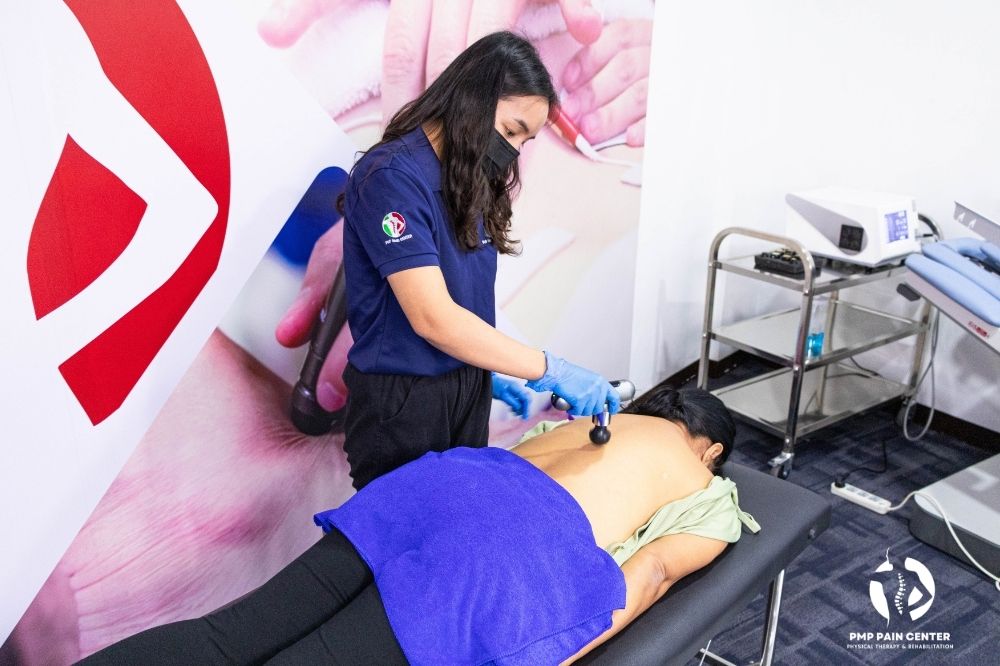
Physical therapy targets the source of the pain. After a proper assessment, a physical therapist builds a treatment plan around the specific condition rather than a standard program handed to everyone who walks in with a sore back.
Treatment may include manual therapy, joint mobilization therapy, soft tissue mobilization, electrotherapy, dry needling, Tecar therapy, posture correction, and more. At PMP Pain Therapy, we use a combination of these therapies to ensure a safe recovery.
Exercises and Stretches That May Help Upper Back Pain
Gentle movement is one of the most effective things you can do for upper back pain. Here are some commonly recommended exercises that are generally safe for most people:
| Exercise | What It Does |
| Cat-cow stretch | Loosens the entire spine and reduces stiffness in the thoracic area |
| Thoracic extension over a foam roller | Opens up the upper back and counteracts forward rounding from prolonged sitting |
| Shoulder blade squeezes | Strengthens the rhomboids and mid-trapezius |
| Chin tucks | Corrects forward head posture and reduces strain on the upper back muscles |
| Gentle walking | Increases blood flow and keeps the back moving without adding load |
| Wall angels | Improves shoulder mobility and upper back flexibility |
When Should You See a Physical Therapist for Upper Back Pain?
Knowing when to see a physical therapist is extremely important. A lot of upper back pain cases improve on their own within a few weeks. But if the pain is not shifting or is already getting in the way of daily life, it’s time to get it properly assessed. Here are the signs that it should not be waited out any longer:
- The pain has been there for more than two to three weeks with no improvement
- It keeps coming back even after it temporarily settles
- The pain is spreading into the arms, shoulders, or affecting breathing
- Work, sleep, and other daily activities are getting harder to do
- The pain feels like it is gradually getting worse
How Can You Prevent Upper Back Pain?
Prevention comes down to one thing: not letting the same positions and habits repeat themselves indefinitely without any intervention. The upper back is remarkably tolerant of stress, but it has limits, and most people find those limits only after the pain has already set in. You can prevent upper back pain by doing the following:
- Taking a short movement break every 30-45 minutes during long sitting sessions
- Applying heat to the upper back before stretching
- Adjusting your workstation so the monitor is at eye level
- Sleeping in a position that keeps the spine properly aligned. Best sleeping positions for back pain vary depending on the person but keeping the spine neutral overnight makes a difference.
- Gentle stretching targeting the upper back and shoulders
Frequently Asked Questions About Upper Back Pain
What is the most common cause of upper back pain?
Muscular irritation or soft tissue problems from poor posture, prolonged sitting, and overuse are the most common causes of upper back pain. For most people, the combination of prolonged sitting and forward head posture is what drives it.
Is upper back pain a sign of something serious?
Most upper back pain is not serious and improves with treatment. However, pain accompanied by breathing difficulty, fever, arm weakness or numbness, or a general feeling of being unwell should be evaluated by a medical doctor as soon as possible.
How long does upper back pain usually last?
Most cases improve within a few weeks but cases tied to poor posture or chronic muscle imbalances may take longer without proper treatment. That’s why starting physical therapy and rehabilitation early makes a lot of difference.
Can physical therapy help upper back pain?
Yes, physical therapy is one of the most effective treatments for upper back pain. A proper assessment followed by a customized treatment plan produces better outcomes than generic exercises or rest.
How can I relieve upper back pain at home?
You can apply heat to your upper back and do gentle stretches like cat-cow and shoulder blade squeezes. It’s also important to regularly stretch and move. If the pain doesn’t improve within two weeks, it’s best to have it checked as soon as you can.
Don’t Let Your Upper Back Suffer Any Longer. Schedule Your Appointment at PMP Pain Center.
A lot of Filipinos just live with upper back pain because they think it’s natural to feel it after a long day at work. But not all pain and discomfort can be shrugged off simply because it’s perceived as normal. Ignoring it does not make it go away. It just gives it more time to get worse and harder to treat.
At PMP Pain Center, upper back pain is not treated as something to just manage through. It’s assessed properly and treated with a program built around your specific condition and needs. Contact us today to schedule a consultation at the nearest PMP Pain Center branch in your area.