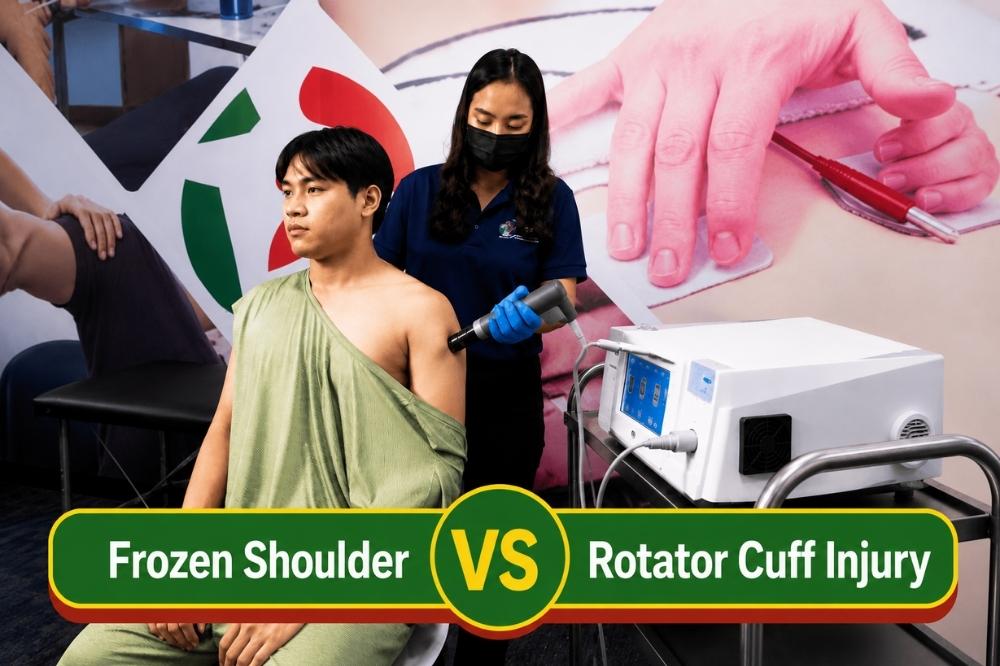
Frozen shoulder and rotator cuff injuries often get confused because both hurt, both limit movement, and both get worse when left untreated. But they’re different problems. Frozen shoulder is a stiffness issue where the joint capsule tightens up and movement starts locking down in every direction. On the other hand, rotator cuff injury is a weakness and pain problem where the shoulder can still move but lifting, rotating, or reaching triggers sharp discomfort and the arm does not feel as strong as it should.
If you’ve been looking into frozen shoulder vs. rotator cuff injury and when you should see a physical therapist, here’s what you need to know from licensed experts.
What Is Frozen Shoulder?
Frozen shoulder (adhesive capsulitis) happens when the connective tissue surrounding the shoulder joint thickens and tightens over time. This condition is not caused by a sudden injury. It develops gradually and the stiffness becomes more severe.
Frozen shoulder is common in people with diabetes, thyroid conditions, and those who have kept their shoulder immobile for a period due to injuries or surgery.
Frozen shoulder symptoms:
- Dull, aching pain spread across the whole shoulder
- Worsens at night and disrupts sleep
- Movement slowly becomes more restricted in every direction
- Simple tasks like reaching up or putting on a shirt get harder
- No clear incident that caused it
What Is a Rotator Cuff Injury?
The rotator cuff is a group of four muscles and their tendons that hold the shoulder joint together and allow it to move. When people say they have a rotator cuff injury, they usually mean one of two things: a tear in one of those tendons, or inflammation from overuse, also called tendinitis (pamamaga ng litid).
A rotator cuff tear typically causes weakness and instability in the shoulder rather than restricted motion. You might still be able to lift your arm but it feels weak, unreliable, or painful when you do.
Rotator cuff injury symptoms:
- Sharp or aching pain in the shoulder, sometimes radiating down the upper arm
- Weakness when trying to lift or rotate the arm
- Pain that worsens with overhead movements or reaching behind the back
- A clicking or popping sensation during movement (parang may gumagalaw na bato sa loob)
- Pain at night, especially when lying on the affected shoulder
- Sudden pain after a fall or heavy lift

When to See a Physical Therapist for Frozen Shoulder or Rotator Cuff Injury
Most people wait too long. Either they tough it out thinking it’ll pass or they’re not sure if what they’re feeling is serious enough to warrant a visit. Here are the signs that it’s time to stop waiting and get it checked out at a physical therapy and rehabilitation center.
1. The pain has been there for more than two to three weeks with no improvement
A little soreness after an unusual activity is normal and usually settles down on its own. But shoulder pain that sticks around for weeks without getting better is a different story. That’s the body signaling that something needs proper attention, not just rest and hope.
2. Everyday tasks are getting harder to do
When reaching for something on a shelf, putting on a shirt, or driving starts becoming a problem, that’s a sign. That kind of functional limitation is exactly what physical therapy is designed to address before it gets worse.
3. The pain is consistently disrupting sleep
Shoulder pain at night is one of the most telling signs of both conditions. If you’re regularly waking up because of shoulder discomfort or can no longer sleep on one side, that’s worth getting assessed sooner rather than later.
4. You felt or heard something during an incident and weakness followed
A sudden pop, snap, or sharp pain during a fall, a heavy lift, or an awkward movement that leaves the shoulder feeling weak afterward is a strong indicator of a rotator cuff injury. This one shouldn’t be waited out.
5. You have diabetes or a thyroid condition and your shoulder is stiffening up
Both diabetes and thyroid disorders significantly increase the risk of developing frozen shoulder. If you have either condition and your shoulder has been feeling progressively stiffer, getting assessed early can make a real difference in how the condition progresses.
What Treatment Programs Are Used for Frozen Shoulder and Rotator Cuff Injury?
Treatment looks different depending on which condition you’re dealing with and how far along it is. For frozen shoulder, the focus is on gradually restoring movement and managing pain throughout its stages. For rotator cuff injuries, the priority is reducing inflammation, rebuilding strength, and protecting the tendon from further damage.
In both cases, physical therapy plays a central role, and the earlier it starts, the better the outcomes tend to be. Here are the treatment programs recommended for each condition:
| For Frozen Shoulder | For Rotator Cuff Injury |
|
|
Frequently Asked Questions
Can frozen shoulder go away on its own without treatment?
Technically yes, frozen shoulder can resolve on its own since it does go through a natural thawing phase. But the timeline without intervention can stretch to two to three years, and the degree of recovery is often less complete than with proper physical therapy.
Is it safe to exercise with a rotator cuff injury?
It depends on the severity. For mild strains and tendinitis, gentle movement and guided exercise are actually part of the recovery process and help prevent stiffness. For significant tears, the wrong exercises can make things worse so it’s better to schedule a consultation with a licensed physical therapist or medical doctor.
How is frozen shoulder diagnosed?
Diagnosis is usually clinical, meaning a doctor or physical therapist assesses the shoulder through physical examination and movement tests. Imaging like an X-ray or MRI may be ordered to rule out other conditions like a rotator cuff tear or arthritis, since several shoulder conditions can look similar on the surface.
Shoulder Pain Is Not Something You Just Live With
Many Filipinos push through discomfort and tell themselves it’ll pass due to poor accessibility to quality care. At PMP Pain Center, we make physical therapy and rehabilitation accessible to those in need so that Filipinos no longer have to choose between getting proper care and just living with the pain. Contact us today to schedule your appointment at the nearest PMP Pain Center branch near you.